


When your professional equipment represents thousands of dollars in investment, standard luggage simply isn’t enough. Hard travel cases are the gold standard for protecting valuable gear and for good reason.
Whether you’re transporting camera equipment, medical devices, or precision tools, the right case can mean the difference between arriving ready to work or facing costly damage.
The Reality of Equipment Transportation
Checked luggage takes a beating.
- Baggage handlers move millions of bags daily
- Luggage can experience up to 6× the force of gravity
- Drops from conveyor belts often reach 3–4 feet
For high-value equipment, these are real risks and not just statistics.
Hard travel cases are designed to handle these conditions. Unlike soft luggage that relies only on padding, hard cases use rigid outer shells made from materials like rotomolded polyethylene, injection-molded polymers, or aluminum. These shells absorb and redirect impact forces while keeping moisture, dust, and debris out.
Why Hard Travel Cases Work
Hard cases protect equipment through engineered design, not just padding.
A rigid exterior prevents crushing and deformation. Tight seals block out water, dust, and debris. Reinforced corners and edges absorb impact forces before they reach the contents inside. When paired with the right interior system, a hard case keeps equipment stable, protected, and ready for use upon arrival.
However, not all hard cases and not all interiors are created equal. In this blog, we will specifically focus on hard cases and how to pick the right one for your needs.
Key Considerations When Choosing a Hard Travel Case
Not every hard case is right for every job. Before selecting a brand or model, it’s important to evaluate how, where, and how often your equipment will be transported. These factors determine the level of protection and features you actually need.
#1 Transportation Method
Air Travel
If you fly regularly, airline regulations should guide your case selection. Most airlines allow carry-on cases up to 22″ × 14″ × 9″, while checked luggage is typically limited to 62 linear inches (length + width + height combined). Weight also matters, with many airlines enforcing a 50-lb limit for checked bags. Selecting a case designed around these constraints helps avoid fees, forced gate checks, and unnecessary handling risks.
Ground Transport
Cases transported by vehicle offer more flexibility in size, but durability and ease of handling are still important. Features such as recessed wheels, telescoping handles, and stackable designs make loading and unloading more efficient and reduce wear during frequent use.
Shipping as Cargo
Cases shipped as freight face the most demanding handling conditions. For these applications, look for cases that meet ATA-300 Category 1 certification, which indicates the case can withstand at least 100 cycles of airline cargo handling.
#2 Environmental Conditions
Consider the environments your equipment will travel through and operate in.
Marine and coastal environments require corrosion-resistant materials and strong water seals. Dusty or sandy conditions demand fully sealed cases with complete dust protection.
#3 Equipment Specifications
Measure your equipment completely, including protrusions like handles, cables, and accessories. Add at least 2-3 inches on all sides for foam protection. Factor in the combined weight of case, foam, and equipment against airline limits.
Delicate electronics and optics require thicker foam and potentially multiple foam layers. Rugged tools may need less cushioning but benefit from organizational compartments. Equipment worth over $5,000 typically justifies premium protection like Pelican Protector or Storm cases with custom foam inserts.
Frequency of Use
Daily use demands easy-access latches, ergonomic handles, and durable wheels. Occasional travel can balance features and budget more flexibly with options like Pelican Vault series. For one-time or rare use, consider versatile cases that can be repurposed for different equipment.
Once transportation methods, environmental exposure, equipment requirements, and usage frequency are defined, the next step is choosing the right type of hard travel case.
There is no single hard case that works for every application. Materials, construction methods, and design features vary widely, and each serves a different purpose, from lightweight travel protection to heavy-duty shipping and fully custom-engineered solutions. The most effective protection comes from matching the case to the job, then tailoring the custom foam inside around the equipment itself.
At CH Ellis, we design, manufacture, and customize a wide range of hard travel cases, allowing us to recommend solutions based on real-world requirements, not a one-size-fits-all approach.
Pelican: A Trusted Option for Critical Equipment
Pelican is one of several hard travel case solutions CH Ellis works with and customizes, and it is often selected for applications that require certified environmental protection and proven durability in challenging conditions.
Many Pelican models meet IP67 certification, providing protection against dust ingress and temporary water submersion. Automatic pressure equalization valves help manage internal pressure changes during air travel while maintaining a secure seal.
Pelican’s product lineup spans lightweight travel cases to heavy-duty designs built for repeated, demanding use. For professionals who travel frequently with valuable equipment, the Pelican ATX travel series offers a practical balance of durability, mobility, and airline-friendly design.
CH Ellis offers multiple ATX sizes and can customize interiors to match specific equipment requirements.
Pelican ATX Models Available at CH Ellis
CH Ellis has multiple sizes available, making it easy to choose the perfect option for your travel needs.
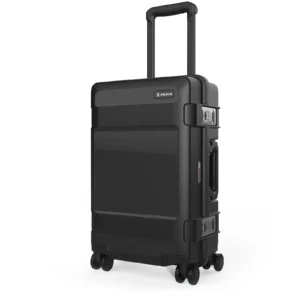
Pelican ATX 22″ Carry-On (HC22) – $499.95
Perfect for 3–5 day trips and most airline carry-on requirements.
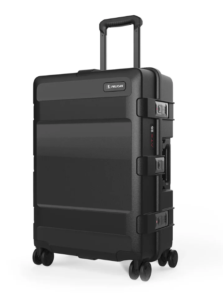
Pelican ATX 25″ Check-In (HC25) – $599.95
A great all-around size for week-long or international travel.
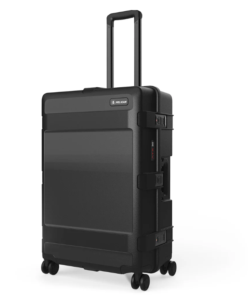
Pelican ATX 30″ Check-In (HC30) – $699.95
For extended trips or travel with bulky gear and equipment.
The CH Ellis Advantage
Choosing the right hard travel case is only part of the equation. How that case is configured, customized, and supported over time is what ultimately determines whether your equipment stays protected in real-world use.
At CH Ellis, we go beyond supplying cases. We design, manufacture, and customize hard travel case solutions that align with how equipment is actually transported, stored, and used in the field. Our team works across a wide range of hard case types, both CH Ellis–manufactured and trusted third-party options, allowing us to recommend solutions based on performance requirements rather than brand limitations.
With decades of experience, our in-house capabilities allow us to adapt standard cases or engineer custom solutions that protect equipment, improve organization, and support long-term use.
Protecting Your Investment Starts with the Right Partner
Hard travel cases protect productivity, safety, and reputation. Selecting the right case, interior design, and materials ensures that valuable tools and devices arrive ready to perform, every time.
At CH Ellis, we combine deep manufacturing expertise with a consultative approach to help customers choose and customize the right hard travel case solution for their needs. From stock cases with custom foam to fully engineered transport systems, we build protection that works in the real world.
Request For Quote or contact our team to discuss the right hard travel case solution for your application.